The article defines a brand voice generator as a tool that builds a reusable writing style profile from traits or existing content, contrasting questionnaire-based and content-analysis-based approaches. It explains why AI content drifts toward generic copy without persistent voice memory and outlines five evaluation filters—reusable output, real reference material, draft validation, human approval, and workflow fit—to maintain consistency at scale.
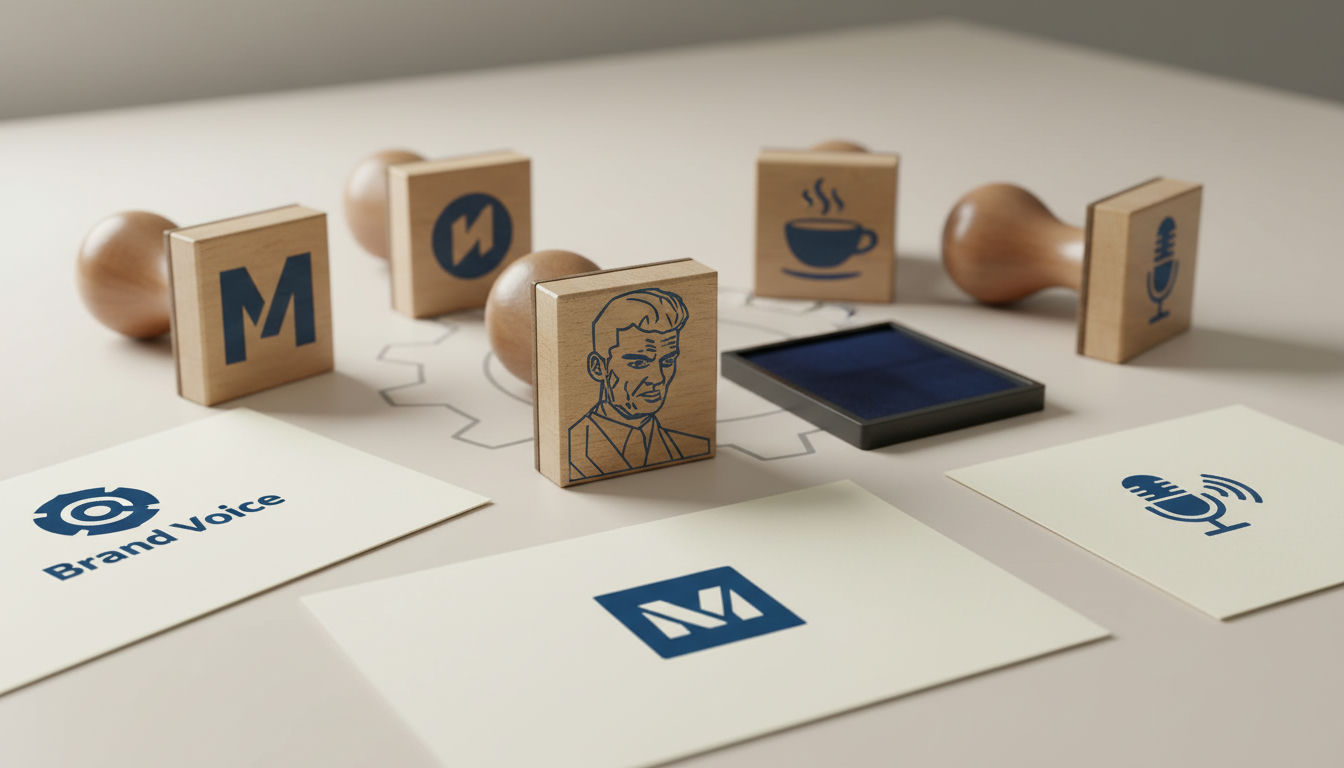
A brand voice generator is a tool or structured method that analyzes existing content, or a set of self-described traits, to produce a reusable communication style profile covering tone, vocabulary, sentence patterns, and messaging approach. It is distinct from AI voice or text-to-speech tools like ElevenLabs, which convert written text into audio: a brand voice generator works entirely in writing, producing a style guide, prompt, or rule set that keeps written content consistent across authors and AI systems.
That profile is typically delivered as a style guide, a set of do's and don'ts, sample sentences, or a prompt and rule set that writers and AI systems can follow. The output a team should expect is practical and portable: core adjectives, vocabulary preferences, formality and reading level, plus examples of what to use and what to avoid. That reference is what lets different writers or models sound like the same brand.
Teams generally encounter two broad approaches: questionnaire and framework-based generators that define voice through guided choices, and content-analysis-based generators that extract a voice profile directly from a corpus of existing content. With the category defined, the real question is how these tools actually build a voice profile, and the two dominant methods produce very different outputs.
A brand voice generator uses one of two mechanisms: questionnaire/framework-based tools that build a voice from self-described adjectives and rules, or content-analysis-based tools that ingest a content corpus and extract patterns algorithmically. Both produce a voice profile, but a profile generated once is only the starting point; the harder problem is keeping every subsequent piece of content on-voice.
Questionnaire/framework-based generators start with language, not data. You pick a handful of personality traits like professional, bold, or empathetic, set a primary tone (conversational, formal, educational), list terms to avoid, and write custom rules such as "always use active voice." The output is a human-readable style guide: adjectives, do's and don'ts, sample sentences, and a reusable prompt. This works best when you have little published content or need to align stakeholders quickly. The trade-off is subjectivity: the result reflects how you describe yourself.
Content-analysis-based generators reverse the flow. The tool relies on natural language processing to extract tone, vocabulary, sentence structure, and personality from what you've already written. HubSpot's brand voice is automatically generated using content intelligence and website content, capturing tone, personality, and writing style as a baseline you can edit. In practice you paste or upload samples: HubSpot asks for at least 500 words containing beginning, middle, and end, and lets you keep up to four characteristics. Independent roundups note similar patterns, such as tools that read a batch of sample text to return a tone description. Output is closer to your actual published voice because it is derived from it, not declared.
| Criterion | Questionnaire/Framework-Based | Content-Analysis-Based |
|---|---|---|
| Input required | Self-described traits, audience, words to avoid, custom rules | URLs, files, or pasted samples from existing content |
| How voice is derived | Mapped to a framework (character, tone, purpose, language) | NLP analysis of vocabulary, sentence structure, and personality in your corpus |
| Typical output | Adjectives, do's/don'ts, sample sentences, reusable prompt or style guide PDF | Baseline profile of tone, personality, writing style with editable traits and terms to avoid |
| Setup effort | Seconds: pick traits and rules | Minutes: gather representative samples |
| Best fit | New brands or teams aligning from scratch | Established brands with existing content corpus |
| Limitation | Can feel generic if self-description is vague | Only as good as the samples you provide |
Brand voice drift in AI-generated content is the gradual loss of distinctive tone that shows up after a few dozen articles, when a static voice profile is created once and never re-applied to each new generation, letting the model default back to average web copy.
HarperFlow publishes highly structured articles featuring FAQs, data tables, and direct-answer blocks that meet the rigorous citation standards required by AI search engines. By continuously auditing and improving your content through AI answer analytics, HarperFlow helps your site build long-term authority and visibility that outlasts ad-dependent strategies.
The mistake is treating a one-time profile as finished work. It solves article one. By article ten, prompts are being typed by different people, past context is forgotten, and no check forces the model to reuse approved phrasing.
Symptoms are easy to spot in bulk:
Three structural causes drive it. First, most chat tools have no persistent memory between generations, so prompts are fragile: they depend on whoever is typing, and they're forgotten between sessions. Second, there is no voice checkpoint before publish, so small shifts compound. Third, the profile is rarely updated as positioning shifts, so it grows stale while the brand moves on.
Teams that keep voice steady treat the guide as a training input that travels with the work. Contentstack describes that fix as persistent constraints via Knowledge Vaults and Voice Profiles applied to every interaction, rather than a one-off prompt. Practical counter-pressure includes paste-in voice anchors of 2-4 past articles every session, word-level allow and block lists, explicit structural rules for sentence length, and a short voice checklist that asks whether a reader would recognize the piece as yours.
The mechanism behind the drift is that models optimize for statistically likely text, so without anchoring inputs each piece moves toward the center. Koira defines this as brand voice drift is the gradual process by which AI-generated content becomes less distinctive and more generic over time, which is why monthly audits to catch new patterns matter as much as per-article review.
This is where a publishing system with voice memory fits. HarperFlow includes brand voice memory as one component of an automated Webflow publishing workflow, re-applying approved phrasing and style constraints to every article across a long run instead of injecting a profile once.
A one-off brand voice profile only solves the first article; without a persistent check applied to every subsequent piece, tone drifts back toward generic AI-speak within weeks.
Knowing why voice drifts also shows what to test before trusting any brand voice generator or workflow with your content.
A brand voice generator should be judged on whether its output actually gets used. Most companies have some form of brand guidelines in place, but far fewer apply them consistently across their organization, and every criterion above points to the same test: does the voice hold up at volume, not just in a single sample.
Before you adopt any tool, run it through five checkable filters:
If a tool fails two or more of those, it will become another unused document.
Treat any brand voice generator as a starting artifact, not a finished solution. The real test is not the first article it produces. It's whether tone stays consistent after 20+ published pieces, when different authors, topics, and deadlines are in play.
No. A brand voice generator analyzes your existing content to create a reusable communication style profile for writing, covering tone, vocabulary, and sentence patterns. A tool like ElevenLabs provides text to speech with high quality, human-like AI voices that converts written text into audio. One controls how you write, the other controls how text sounds.
Yes, you can use a questionnaire or framework-based approach. You select personality traits, set formality and reading level, and define terms to avoid and custom rules. The result will reflect how you describe yourself rather than measured patterns, so plan to refine it once you have real samples.
Upload representative samples that contain a beginning, middle, and end, such as blog posts, help docs, and your about page. HubSpot's approach is automatically generated using content intelligence and website content and it asks for at least 500 words long per sample. The closer the corpus is to the writing you want to reproduce, the closer the output will be.
Short snippets do not show enough variation in tone, vocabulary, sentence structure, and personality to extract a reliable pattern. A longer sample gives the natural language processing model enough context to distinguish consistent choices from one-off phrases. That is why HubSpot specifies each sample should be at least 500 words long.
Keep it focused enough to remember and apply. HubSpot lets you keep up to four characteristics so the guide stays portable and writers can actually follow it. If you need more nuance, add vocabulary preferences and explicit do's and don'ts rather than more adjectives.
That is brand voice drift, defined as the gradual process by which AI-generated content becomes less distinctive and more generic over time. Models optimize for statistically likely text, so without anchored examples they shift toward the internet average, using phrases that sound professional but do not sound like you. Drift gets worse when prompts are fragile: they depend on whoever is typing, and they're forgotten between sessions.
Treat the voice guide as a persistent input, not a one-off chat prompt that gets forgotten between sessions. Store a reusable style guide or rule set with allow and block lists and paste in 2-4 past articles as anchors each session. Contentstack describes this fix as persistent constraints applied to every interaction via knowledge vaults and voice profiles.
Run a short checklist on every draft, not just a monthly audit. One approach noted for drift prevention is that ideally every piece of AI-generated content should pass a voice checklist before publication, a quick five-to-eight question scan that takes about two minutes. Ask whether word choice, sentence length, and forbidden terms match your approved list and whether a reader would recognize the piece as yours.
Related articles
HarperFlow publishes highly structured articles featuring FAQs, data tables, and direct-answer blocks that meet the rigorous citation standards required by AI search engines. By continuously auditing and improving your content through AI answer analytics, HarperFlow helps your site build long-term authority and visibility that outlasts ad-dependent strategies.
Start Your Trial TodayLover of all things automation and all things content.
Your privacy
Necessary storage keeps the site secure and working. With permission, analytics helps us improve it and marketing tools measure campaigns. Google can still send limited cookieless signals when optional storage is off. Read our Privacy Policy.
Your browser sends a privacy signal (Global Privacy Control), so optional technologies start off — your choice here takes precedence.
Privacy choices
Necessary storage supports security, consent, and the features you request. Optional categories can be changed at any time.
Security, fraud prevention, consent preferences, form delivery, and popup suppression.
Your browser sends a Global Privacy Control signal, so optional technologies start off by default. Your explicit choice here takes precedence.
A practical AEO/GEO manual for making your Webflow site clearer, better sourced, and easier for answer engines to use—without gimmicks or guarantees.
Find gaps in discovery, extraction, evidence, authority, and freshness
Use evidence patterns, briefs, and fill-in worksheets
Run a focused 30-day AEO/GEO operating sprint
We’ve emailed your copy. It should arrive within a few minutes.
If it is not in your inbox within a few minutes, check spam or promotions.